
Industrial safety has traditionally been built around the environment.
Factories install emergency stops. Hazardous areas are marked. Machines are guarded. Gas detectors are positioned around facilities. Workers receive protective equipment and safety training. These measures remain essential. But as industrial environments become more connected and complex, another question is becoming increasingly important:
What if safety systems could understand the condition of the individual worker, not just the environment around them?
This could represent a major shift in the way industrial safety is designed.
From Protecting the Workplace to Protecting the Worker
Traditional industrial safety systems primarily monitor machines, processes and environmental conditions.
A temperature sensor may detect excessive heat. A gas detector may identify a hazardous concentration. A machine-monitoring system may detect abnormal vibration. But none of these systems necessarily knows how the worker is responding to that environment.
Two workers can be exposed to the same conditions and experience very different effects. Physical exertion, fatigue, individual activity and exposure duration can all influence how a person responds. This creates a gap between environmental safety and personal safety. Closing that gap could require bringing sensing closer to the individual.
The Rise of the Connected Worker
Wearable technology offers one possible way to bridge this gap.
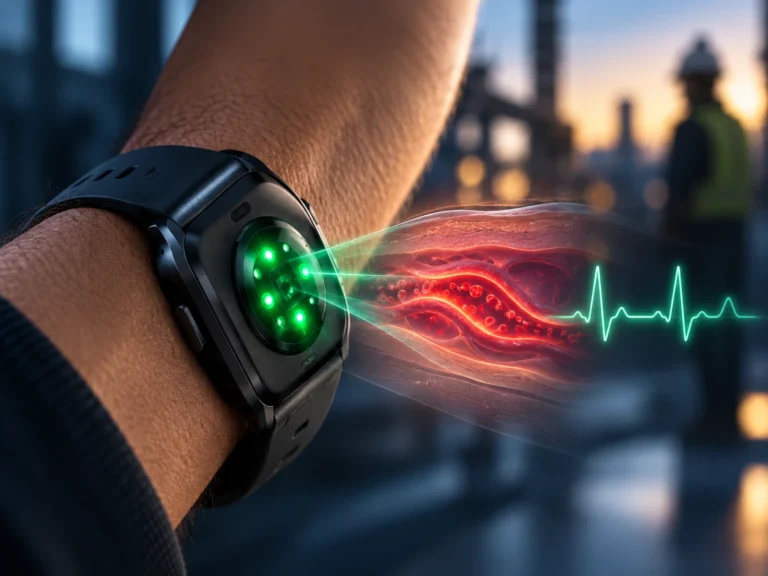
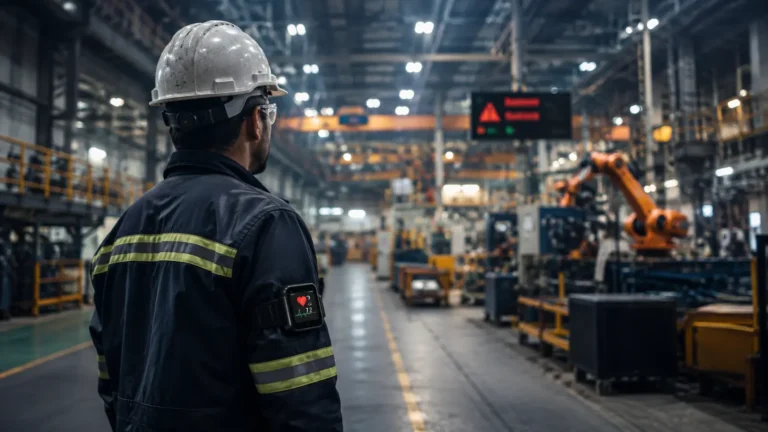
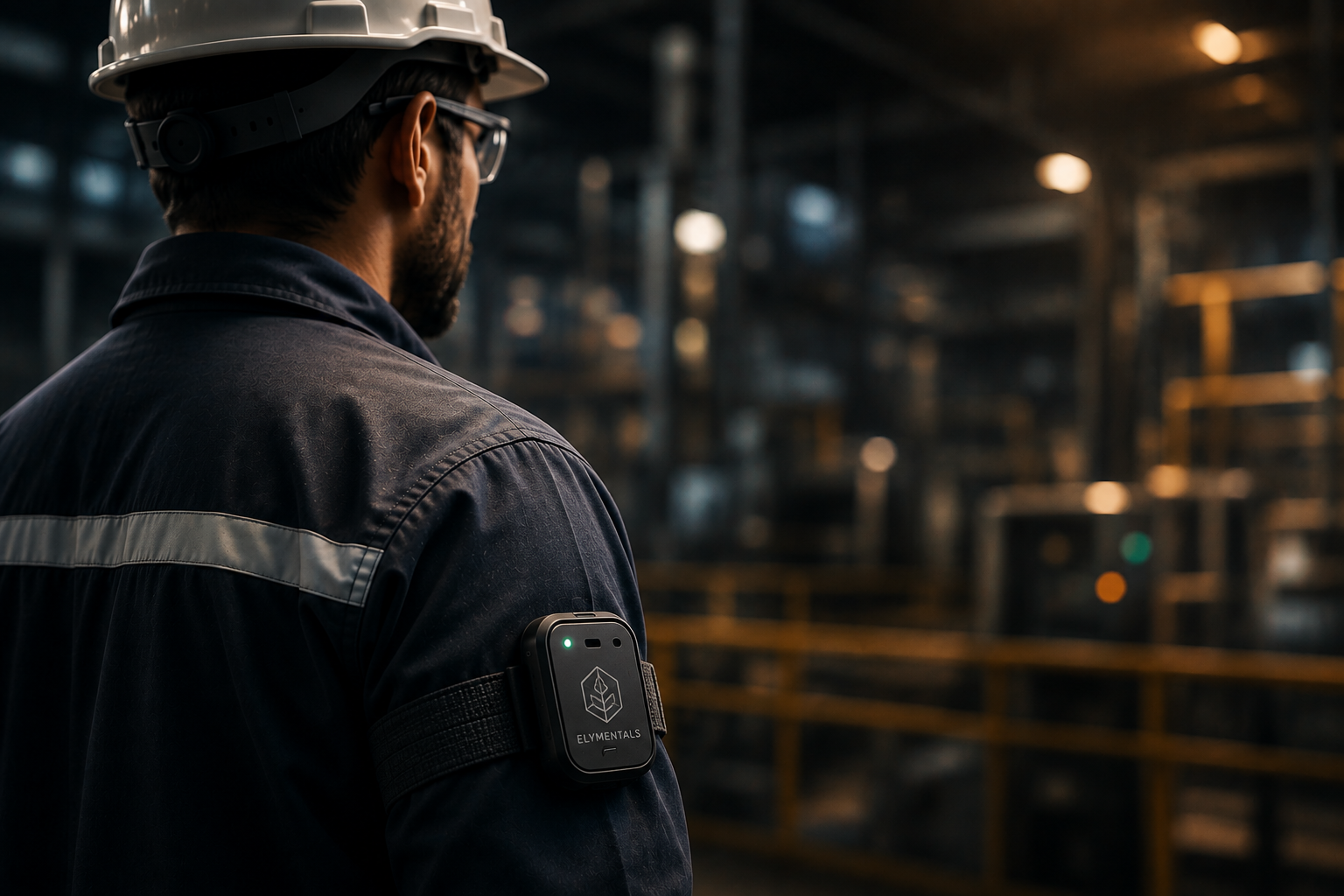
Instead of relying entirely on fixed sensors around a facility, a connected worker could carry or wear technology capable of continuously collecting relevant information. Depending on the application, this could include motion, location, physiological signals or exposure-related data. The advantage is not simply that more data becomes available. The advantage is that the data is associated with a specific person in a specific context.
That distinction matters.
Knowing that a hazardous gas is present in an area is important. Knowing that a particular worker is inside that area, has remained there for a certain period, and may be showing signs of distress could provide a much richer picture of the situation.
Context Is More Important Than a Single Sensor
One of the biggest challenges in wearable safety is avoiding the assumption that a single measurement automatically represents an emergency.
A sudden movement could indicate a fall—but it could also be intentional. An elevated heart rate could indicate distress—but it could also result from physical exertion. A worker remaining stationary could indicate an injury—or simply that the worker is performing a task requiring little movement. This is why personal industrial safety cannot depend entirely on isolated threshold-based alerts.
A more intelligent system could combine multiple sources of information.
For example:
Location + motion + physiological response + environmental conditions + time
can potentially provide more meaningful context than any one of those variables independently. This is where data processing and artificial intelligence become particularly interesting. The goal is not simply to detect unusual values. It is to determine whether a combination of signals suggests that something meaningful may be happening.
Moving From Reactive to Proactive Safety
Most industrial safety systems are designed to respond when something has already gone wrong. A worker falls, a gas detector raises an alarm, a machine trips, or an emergency button is pressed. These systems are essential because they provide a clear response to an identifiable event.
But many incidents do not begin with a single, obvious event.
They often develop through a combination of smaller changes. A worker’s movement may become unusual. Their physiological response may begin to change relative to the task they are performing. At the same time, environmental exposure may be increasing, or they may have remained in a high-risk area longer than expected.
Each signal on its own may appear harmless.
A change in movement might simply mean the worker has changed tasks. An elevated heart rate could be the result of physical exertion. Remaining in a particular area may be completely normal for the job. But when these signals occur together, in the right context, they could tell a very different story.
This is where the concept of proactive safety becomes interesting.
Instead of waiting for one sensor to cross an emergency threshold, an intelligent safety system could continuously combine information from the worker, the surrounding environment and the equipment they are interacting with. The objective would not necessarily be to predict every incident, but to recognize patterns that suggest a situation may be becoming unsafe.
In other words, the system could move from asking:
“Has an emergency happened?”
to asking:
“Is the situation beginning to look unsafe?”
That shift—from reacting to an event to understanding the conditions that may lead toward one—could fundamentally change how industrial safety technology is designed.
Why Personalization Matters
Industrial safety is often standardized because standards are necessary. But people are not standardized.
Workers perform different tasks. They move differently. They have different workloads, operating conditions and exposure patterns. A more personalized safety architecture could potentially account for this variation.
That does not mean creating a completely different safety system for every employee. Instead, it could mean designing a common platform capable of interpreting information in context. The same underlying infrastructure could support different workers, roles and environments while adapting the interpretation of their data to the situation.
This could be particularly valuable in industries where conditions change rapidly or where workers operate away from fixed infrastructure.
The Challenges Are Significant
Personalized industrial safety also introduces difficult engineering and operational questions.
Wearable devices must be comfortable enough to be worn consistently. They need reliable communication, long battery life and robust protection against dust, water, temperature and physical impact. Data security and privacy become increasingly important when systems collect information associated with individual workers.
False alarms are another major concern. A system that repeatedly alerts unnecessarily can eventually become something workers learn to ignore. For this reason, the future of industrial safety is unlikely to be about simply adding more sensors.
It will be about designing systems that can interpret information reliably and communicate only when action is meaningful.