
A factory can have an ambulance standing by, trained safety teams, CCTV cameras, alarms and carefully written emergency procedures—and still have a dangerous gap in its safety system.
The gap is often simple:
What if nobody knows that something is wrong?
In an emergency, the first few moments can matter enormously. A worker may fall in an isolated area, become unwell during a shift, encounter a hazardous environment, or simply be unable to call for help. The response team may be ready. The infrastructure may exist. But the system still depends on someone noticing the problem and communicating it.
That is where workplace safety technology is beginning to change the conversation.
We already monitor almost everything
Modern industrial operations are becoming increasingly data-driven.
Factories track machine performance, production output, downtime, quality, energy consumption, inventory and countless other operational metrics. A manager can often see the health of a machine from a dashboard hundreds of metres away.
But there is a different question:
How much do we know about the safety condition of the people operating those machines?
Workforce safety is usually handled through a combination of procedures, supervision, periodic health checks, PPE, emergency systems and manual reporting. These are important, but many are inherently reactive. They become useful after a situation has been noticed, reported or identified.
That creates a gap between an event happening and someone becoming aware of it.
The real problem may be the awareness gap
Imagine a worker operating alone in part of a large facility.
A fall occurs.
The worker is unable to immediately reach a phone. The surrounding area is quiet. A safety team may be available elsewhere on the site, but they don’t yet know there is an emergency—or exactly where it has happened.
The issue isn’t necessarily that the company has failed to provide emergency resources.The issue is that the information needed to activate those resources isn’t arriving quickly enough.
This becomes even more difficult across large plants, remote work areas and environments where workers may not always be directly visible to supervisors or colleagues.
A system that can shorten that gap could change the way workplace safety works.
Why wearable technology is interesting ?
A wearable has one major advantage over many fixed safety systems:
It stays with the person.
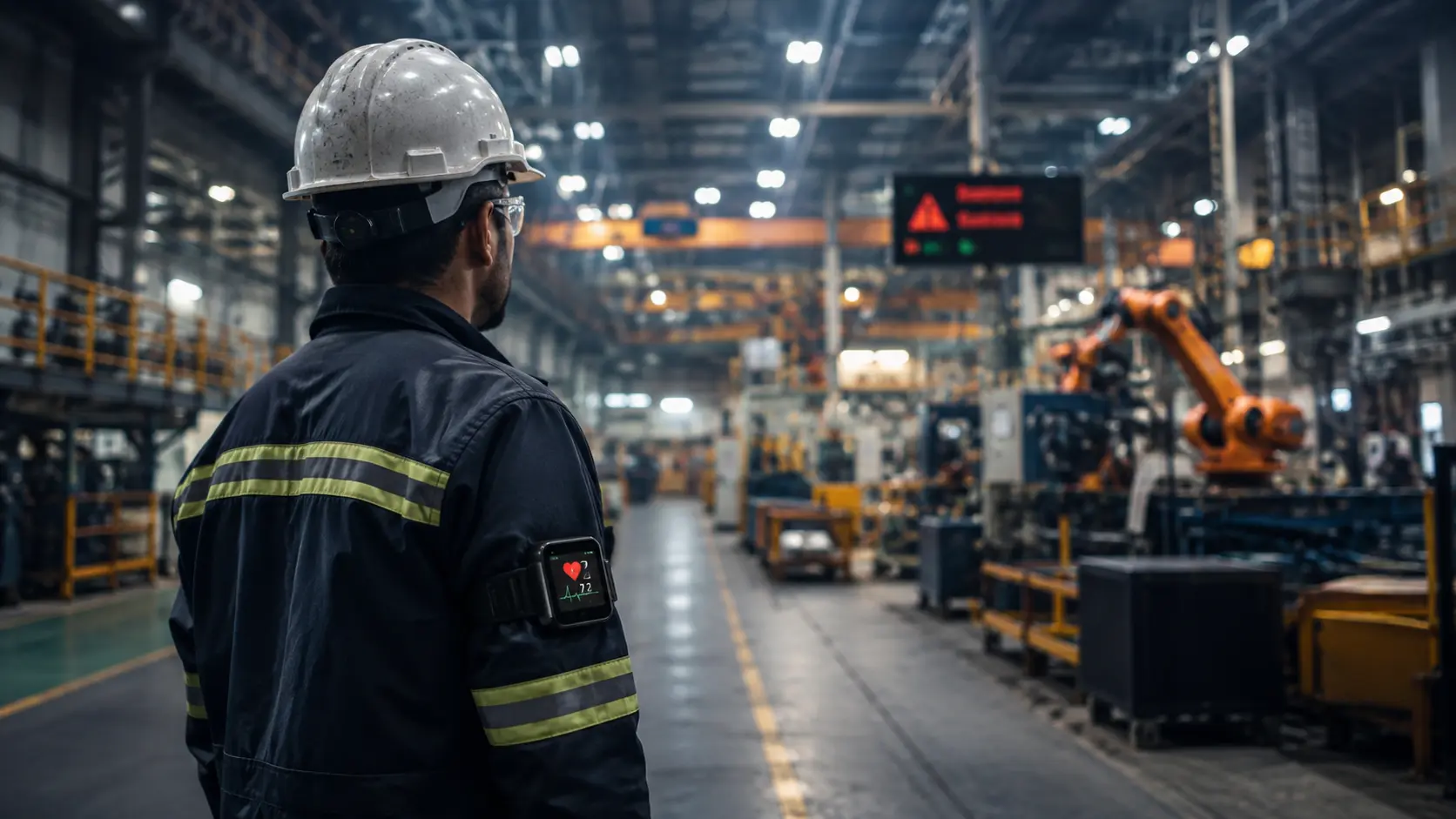
Instead of relying entirely on a worker noticing a problem and manually reporting it, a wearable can potentially remain connected to the broader safety system throughout a shift.
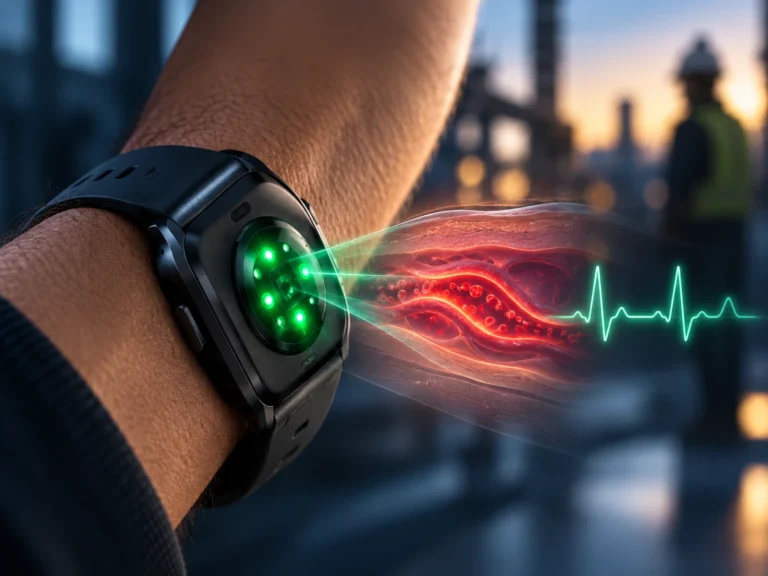
Depending on the technology and its stage of development, a wearable safety platform can explore signals related to movement, physiological condition, environmental conditions and significant events.
That doesn’t mean a wearable can magically predict every accident.It means there is an opportunity to create another layer of awareness.
A fall could potentially be detected. An unusual physiological pattern could potentially trigger attention. An environmental change could potentially become part of the context. An emergency interaction could potentially communicate that a worker needs help.
The important idea is not any single feature. It is the ability to bring different pieces of information together.
From reactive safety to earlier awareness
This is where the conversation becomes more interesting.
The goal should not be to replace safety officers, emergency teams or established workplace procedures. Technology should strengthen them.
Think of it as a chain:
Sense → Understand → Detect → Assess → Alert
A wearable gathers relevant signals. The system interprets those signals in context. Potentially unusual situations are identified. The right people receive useful information.
And the response can begin with more context than simply:
“Something happened somewhere.”
Imagine instead having a system that can help answer: Who may need attention? What may have happened? Where are they? Is the situation potentially urgent?
That is a very different starting point for emergency response.
Where Elymentals fits ?
This is the problem Elymentals is exploring.
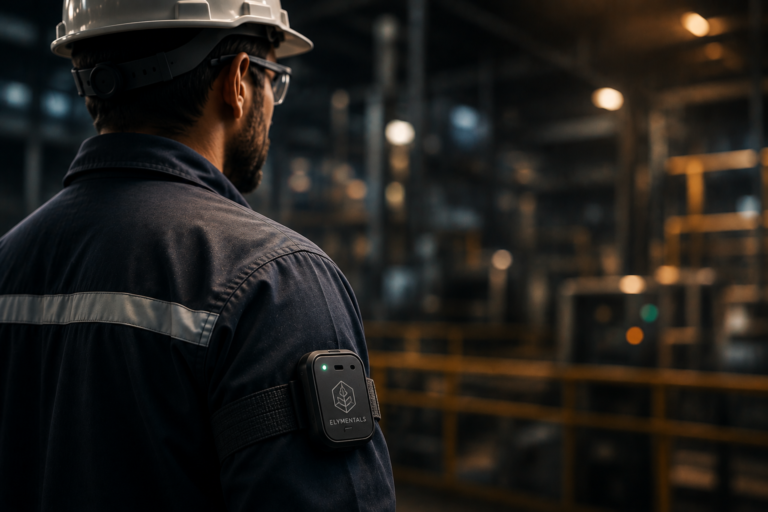
We are developing a screenless wearable safety concept designed around the idea that safety technology should remain unobtrusive while staying connected to the person wearing it.
Our starting point is industrial and high-risk environments, where the need for better awareness can be particularly important. We are exploring how human signals, environmental information and real-world events could eventually work together to support a more connected approach to workforce safety.
The product is still in the prototype and development phase. The hardware, sensing approach, connectivity and intelligence layer are all being explored and refined.
But the larger question is already clear.
What if workplaces could know more about the safety condition of their workforce before an emergency becomes obvious?
That doesn’t mean knowing everything about every worker. It means creating a responsible, privacy-conscious layer of awareness that can help safety teams understand when something may require attention.
The future of workplace safety may not simply be about reacting faster after something goes wrong.
It may be about knowing sooner that something is wrong in the first place.
Elymentals is exploring that future.